


Chicken Madras: Traditional vs BIR (What’s the Difference?)

Updated: Apr 24
Intro
Chicken Madras is one of the most popular curries on UK menus, known for its bold heat, rich tomato base, and deep, warming spices. But depending on how it’s cooked, the flavour, texture, and overall experience can be quite different.
In this guide, we’re comparing two distinct approaches:
Both produce excellent results — but they follow very different systems.

Traditional vs BIR Chicken Madras
What Is Traditional Chicken Madras?
Traditional-style Chicken Madras is built from the ground up using fresh ingredients, slow cooking, and careful layering of spices.
The sauce develops naturally by cooking down tomatoes, garlic, chillies, and spices over time, creating a deeper, slightly thicker curry with a more rustic texture.
This method takes longer, but it allows the flavours to fully develop and gives the dish a more natural, less processed feel.
👉 Best for:
Home cooks who enjoy cooking from scratch
Deeper, more developed flavour
A more traditional cooking experience
What Is BIR Chicken Madras?
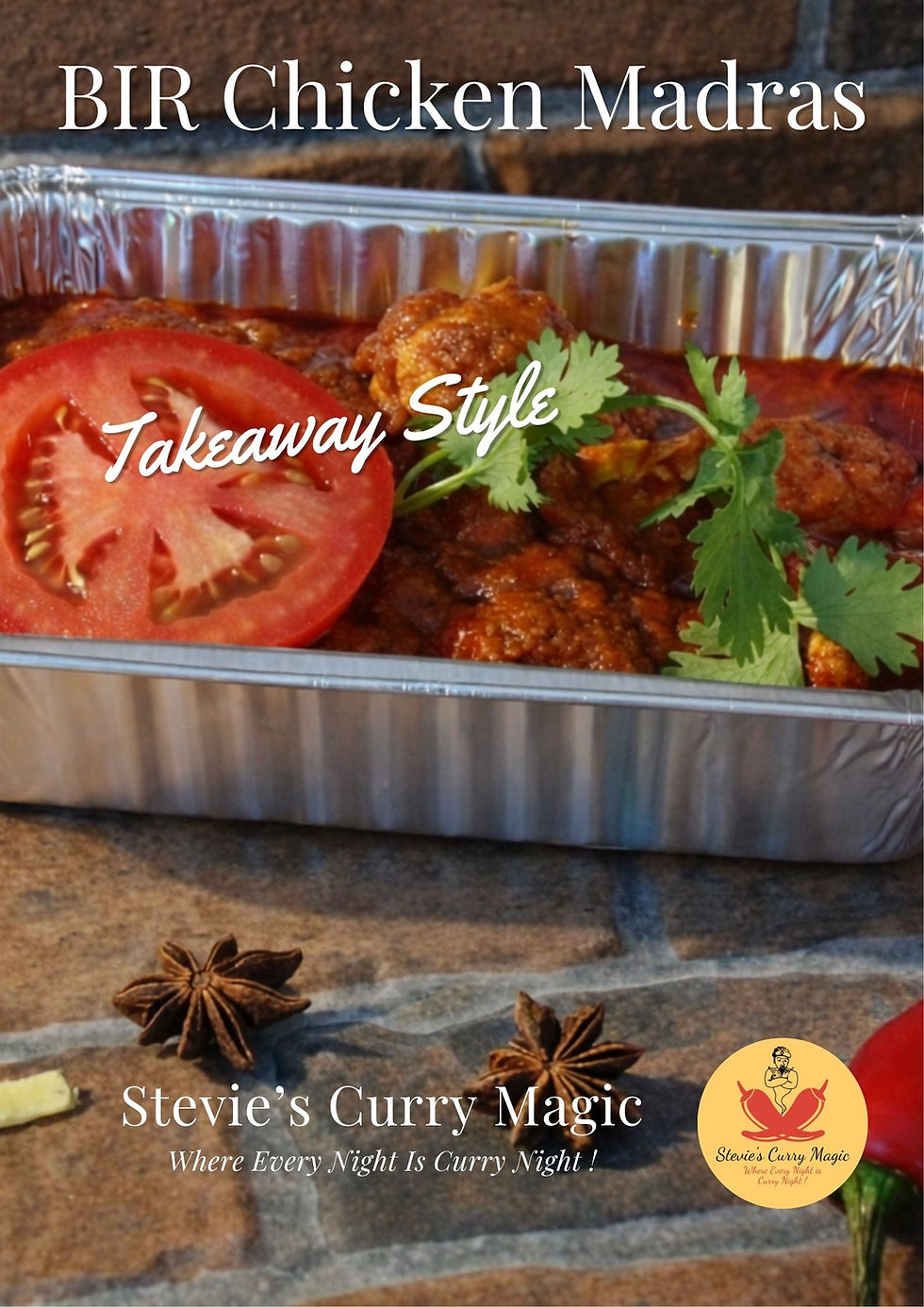
BIR (British Indian Restaurant) Chicken Madras is designed for speed, consistency, and a smooth finish.
Instead of building the sauce from scratch each time, it uses a pre-made base gravy along with pre-cooked ingredients. The curry is then cooked quickly over high heat, layering spices and reducing the sauce in minutes.
The result is a smooth, vibrant curry with bold flavour and that unmistakable takeaway texture.
👉 Best for:
Fast cooking (ready in minutes)
Smooth, restaurant-style sauces
Consistent results every time
Feature | Traditional Madras | BIR Madras |
Cooking Time | Longer (30–45 mins) | Fast (10–15 mins) |
Method | Built from scratch | Uses base gravy |
Texture | Slightly thicker, rustic | Smooth, saucy |
Flavour | Deep, natural | Bold, balanced, consistent |
Cooking Style | Low to medium heat | High heat, fast cooking |
Flexibility | Less flexible mid-cook | Highly adjustable |
Which One Should You Choose?
It really comes down to how you like to cook.
If you enjoy taking your time and building flavour from scratch, the traditional version is incredibly rewarding and gives you a deeper connection to the dish.
If you prefer speed, consistency, and that classic takeaway finish, the BIR method is hard to beat — especially once you understand the system.
Many home cooks find that learning both methods gives them the best of both worlds.
Try Both Versions
If you’d like to try each style, you can follow my full recipes here:
Chicken Madras: Traditional vs BIR – FAQs
What is the difference between traditional and BIR Chicken Madras?
The main difference is how the sauce is made. Traditional Chicken Madras is cooked from scratch by slowly developing flavours with tomatoes and spices, while BIR Chicken Madras uses a pre-made base gravy and is cooked quickly over high heat for a smoother, restaurant-style finish.
Which version of Chicken Madras tastes better?
Neither is better — they’re just different. Traditional Madras has a deeper, more natural flavour, while BIR Madras is smoother, more consistent, and closer to what you’d get from a takeaway.
Is Chicken Madras an authentic Indian dish?
Chicken Madras, as commonly served in the UK, is a British Indian restaurant creation inspired by South Indian flavours. Traditional versions are closer to home-style Indian cooking, while BIR versions are designed for restaurant efficiency.
Why do curry houses use base gravy?
Base gravy allows restaurants to cook curries quickly and consistently. It forms the foundation of many dishes, helping chefs produce smooth sauces in just a few minutes.
Can I make BIR Chicken Madras without base gravy?
Yes, but it won’t have the same smooth texture or speed. Without base gravy, you’re essentially moving toward a more traditional cooking method.
Which method is easier for beginners?
The BIR method is often easier once you have base gravy prepared, as the process is quick and repeatable. Traditional cooking takes longer and requires more attention to developing flavour from scratch.
Why is BIR Chicken Madras smoother than traditional?
BIR Madras is smoother because of the base gravy and fast cooking method, which creates a more uniform sauce compared to the thicker, more textured traditional version.
Can I switch between traditional and BIR methods?
Yes, and many cooks do. Learning both methods gives you flexibility — you can cook from scratch when you have time or use the BIR method for faster results.
Is BIR Chicken Madras always spicier?
Not necessarily. Both versions can be adjusted for heat, but BIR Madras often has a sharper, more immediate spice kick due to the cooking method.
Which is healthier: traditional or BIR Chicken Madras?
It depends on how they’re cooked. Traditional versions may use less oil, while BIR recipes often use more oil for flavour and texture. Both can be adjusted to suit your preferences.
If you’d like to learn more about how to balance flavours and cook curry house dishes with confidence, I cover this step-by-step inside the Curry Academy, (on our homepage) where I break down the fundamentals of BIR cooking into simple, easy-to-follow lessons.
Final Thoughts
Traditional vs BIR Chicken Madras may share the same name, but they represent two very different approaches to cooking.
One focuses on time, depth, and natural flavour development.The other is built on speed, control, and consistency.
Neither is better — they’re simply different tools for different situations.
Master both, and you’ll have complete control over how you cook your favourite curries at home.

Comments